

Who This Article Is For
- CMOs and VP Marketing realizing their AI content investment isn’t working and needing a strategic reset
- Content Strategy Directors tasked with transformation but unclear what actually needs to change beyond buying better tools
- Marketing Operations Leaders responsible for rebuilding content processes around AI capabilities
- Digital Transformation Executives evaluating which strategic shifts drive real results vs. surface-level tactical changes
- Agency Executives building AI-powered client services and needing frameworks that transform strategy, not just execution
AI Content Transformation: Why Strategy Beats Tools Every Single Time
You invested in AI to transform your content operation. Instead, you transformed efficiency into chaos.
Here’s what actually happened: You bolted AI tools onto a strategy designed for human writers, then acted shocked when everything got worse instead of better.
Your Content Strategy Isn’t Broken—Your AI Implementation Is
More content. Lower quality. Higher costs. Eroded brand voice. Leadership questioning the investment.
Your competitors use the same AI tools and get opposite results—better content, faster production, lower costs, measurable ROI. The difference isn’t the tools. It’s the transformation strategy.
Stop trying to make AI fit your old content strategy. Start building the strategy AI actually requires to work.
Why Most AI Content “Transformations” Fail Spectacularly
The broken approach most teams take:
Step 1: Buy AI tools
Step 2: Train team on prompts
Step 3: Hope it works
Step 4: Watch quality collapse
Step 5: Blame the tools
Here’s what’s actually broken: You’re trying to transform tactics while leaving strategy unchanged.
Your content strategy still assumes humans write everything from scratch. Your workflows still require senior talent to review every word. Your quality standards still depend on individual writer judgment instead of systematic governance.
AI doesn’t transform broken strategies—it accelerates their failure.


The Four Strategic Shifts That Actually Transform Content Operations
Your competitors didn’t just add AI to existing processes. They rebuilt their entire content strategy around what AI does brilliantly and what humans must control.
Shift 1: From Writer-Centric to System-Centric Strategy
Old strategy: Hire great writers, hope they produce great content consistently
Transformed strategy: Build systems that make consistent quality automatic regardless of who writes the prompts
Most content strategies revolve around individual talent. AI-transformed strategies revolve around governance frameworks that scale quality.
Your governance system includes:
- Brand Voice Profiles that define your voice so precisely AI can’t deviate
- Quality gates that catch 70% of issues before human review
- Template libraries that make consistency automatic
- Feedback loops that improve AI performance monthly
When your strategy centers on systems instead of individual talent, quality scales without hiring constraints.
Shift 2: From Output Volume to Revenue Attribution
Old strategy: Publish more content, assume some of it works
Transformed strategy: Track which content types generate pipeline, double down on what converts, kill what doesn’t
Most content strategies measure success by activity metrics—blog posts published, traffic generated, and engagement rates.
AI-transformed strategies are measured by revenue attribution and cost efficiency.
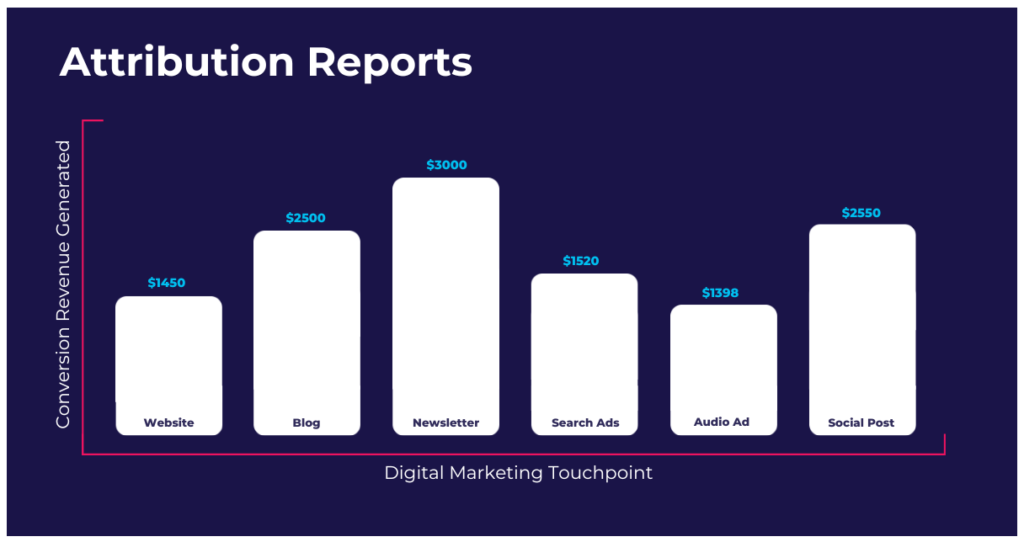
Your ROI measurement framework tracks:
- Cost per lead by content type and production method
- Pipeline attribution showing which content drives SQLs
- Production efficiency gains (time and cost per piece)
- Quality consistency scores over time
When strategy focuses on revenue instead of volume, AI becomes a profit center instead of a cost center.
Shift 3: From Manual Review to Automated Governance
Old strategy: Humans review everything because that’s how you maintain quality
Transformed strategy: Automated systems catch 70% of issues, humans focus on strategic judgment
Most content strategies assume quality requires manual human review of every draft. AI-transformed strategies use automated governance to eliminate preventable mistakes before expensive human review.
Your three-gate quality system works like this:
Automated validation catches fact-checking failures, brand voice violations, compliance issues—the 70% of problems that don’t require human judgment.
Junior review handles tactical fixes that need human eyes but not senior expertise—structure, tone, technical accuracy at $30/hour instead of $150/hour.
Senior approval validates strategic positioning and high-stakes messaging—expensive talent focuses exclusively on what requires their judgment.
When your strategy shifts from “humans review everything” to “systems prevent most problems,” senior talent becomes 3x more productive.
Shift 4: From Generic Execution to Template-Driven Consistency
Old strategy: Every piece starts from scratch, quality varies wildly
Transformed strategy: Pre-built templates for your top content types ensure consistency at scale
Most content strategies treat every blog post like a unique creative challenge. AI-transformed strategies build template systems that make consistency automatic.
Your “Case Study” template includes:
- Voice parameters that can’t deviate from your brand
- Required structural elements (challenge, solution, results, validation)
- Quality benchmarks that trigger human review if missed
- SEO frameworks built into every output
One senior writer builds the template once. Your entire team executes it perfectly 100 times. That’s the difference between scaling chaos and scaling quality.
What Transformation Actually Looks Like in Practice
Before transformation:
- Senior writers spend 6 hours fixing mediocre AI drafts
- Brand voice erodes because nobody defined it precisely enough for AI to follow
- Leadership questions content budget because you can’t prove pipeline attribution
- Team morale suffers because AI created more work instead of less
After strategic transformation:
- Editing time drops 60-70% because governance systems prevent most problems before review
- Brand voice stays consistent because AI follows documented technical specifications
- Leadership approves budget increases because ROI dashboards prove content drives revenue
- Team satisfaction improves because AI handles scalable work while humans focus on strategy
The transformation isn’t about using AI better—it’s about building strategy that makes AI work predictably.
Your competitors aren’t experimenting with prompts. They rebuilt their content strategy around governance frameworks, quality systems, and ROI measurement. They transformed strategy, not just tactics.
The difference between AI chaos and AI advantage isn’t the tools you bought. It’s whether you transformed your strategy to match what AI actually requires.
Stop trying to make AI fit your old strategy. Start building the strategy AI needs to generate revenue instead of chaos.
Ready to Stop the Bleeding and Start Building Systems That Work?
Stop bleeding budget on broken AI workflows. AIContentCMO delivers the governance frameworks that transform chaotic content operations into predictable revenue engines—eliminating expensive trial-and-error while your team watches results compound. Explore strategic consulting and DIY resources that fix what’s broken in 30 days.
Leave a Reply
You must be logged in to post a comment.