
Who This Article Is For
- Content Operations Managers responsible for designing workflows that actually work with AI tools instead of fighting them
- Marketing Operations Directors tasked with rebuilding processes after AI implementations that increased work instead of reducing it
- Content Strategy Leaders watching editing time explode as volume scales and needing systematic workflow solutions
- VP Marketing evaluating why AI tools aren’t delivering promised efficiency gains despite proper training and tool selection
- Agency Operations Directors building repeatable client workflows that maintain quality while scaling AI-powered production
AI Content Workflow Design: Why Process Architecture Beats Better Prompts
You hired AI experts. You bought premium tools. You trained everyone on advanced prompting techniques.
Content quality still collapsed. Editing time still exploded. Leadership still questions the investment.
Your AI Content Fails Because Your Workflow Is Broken
Here’s what nobody tells you: Better prompts can’t fix broken workflows. The best AI tools fail spectacularly when forced into processes designed for human writers.
Your competitors use the same AI platforms and get completely different results because they rebuilt workflows around what AI does brilliantly versus what humans must control. Excellence isn’t about better tools—it’s about better process architecture.
Stop optimizing prompts. Start rebuilding workflows.
Why Traditional Content Workflows Destroy AI Performance
The workflow most teams inherited:
Writer receives assignment → Writes draft → Editor reviews → Senior strategist approves → Publish
This worked when humans wrote everything because writers understood context, maintained brand voice instinctively, and caught their own mistakes.
Here’s why it fails catastrophically with AI:
AI generates a draft in 3 minutes → Junior writer spends 6 hours rewriting everything → Senior editor still finds brand voice violations → Strategist questions why AI made it worse
You’re using a process designed for thoughtful human creation to manage high-volume AI execution. That’s like using horse-and-buggy infrastructure for Formula 1 racing.
Your competitors didn’t just add AI to existing workflows. They rebuilt process architecture around three critical insights about how AI actually operates.
The Three Workflow Principles That Enable AI Content Excellence
Principle 1: Front-Load Constraints, Not Back-Load Corrections
Traditional workflow: Generate draft → Fix everything wrong with it
Excellence workflow: Define exactly what success looks like → Generate draft that meets those specifications → Validate compliance
Most teams treat AI like an unpredictable creative partner who needs constant correction. Excellence workflows treat AI like a precise executor that needs clear specifications.
Your front-loaded constraints include:
Template specifications that lock in structure, tone, and quality standards before AI generates anything. Your templates aren’t suggestions—they’re technical requirements AI must meet.
Brand voice parameters documented so precisely that AI can’t deviate. Not “write professionally”—specific vocabulary requirements, forbidden phrases, structural preferences with examples.
Quality benchmarks defined upfront so AI knows exactly what triggers human review. Not subjective judgment calls—measurable criteria that validate automatically.
When constraints are front-loaded, you get drafts that meet standards instead of drafts that need complete rewrites. That’s the difference between 90-minute edits and 6-hour rewrites.
Principle 2: Separate Execution Workflows From Judgment Workflows
Traditional workflow: Same person writes, edits, and validates strategic positioning
Excellence workflow: AI executes high-volume tasks, junior talent handles tactical validation, senior expertise focuses on strategic judgment
Most workflows mix execution and judgment, forcing expensive talent to waste time on work that doesn’t require their expertise.
Excellence workflows separate these completely:
Execution Layer (AI): Generate drafts, apply templates, follow specifications, handle scalable repetitive work
Validation Layer (Junior talent): Check structure, verify tone, confirm technical accuracy, fix tactical issues at $30/hour
Judgment Layer (Senior talent): Validate strategic positioning, approve high-stakes messaging, focus on what requires expertise at $150/hour
When workflows separate execution from judgment, your senior talent becomes 3x more productive because they stop touching work that shouldn’t reach them.
Principle 3: Build Feedback Into Every Workflow Stage
Traditional workflow: Notice AI makes the same mistakes weekly, keep fixing them manually, never update the system
Excellence workflow: Capture every edit, identify recurring patterns, systematically eliminate repeat failures
Most workflows treat AI performance as static. Excellence workflows treat it as continuously improvable.
Your feedback-driven workflow includes:
Edit tracking at each stage: Document what gets fixed, why it needed fixing, how long fixes took
Pattern analysis monthly: Identify the three most common edit types consuming the most time
Systematic optimization: Update templates, refine prompts, adjust quality gates based on actual performance data
When feedback loops are built into workflow stages, AI gets better at your specific use case every month. Without them, you repeat the same expensive corrections forever.
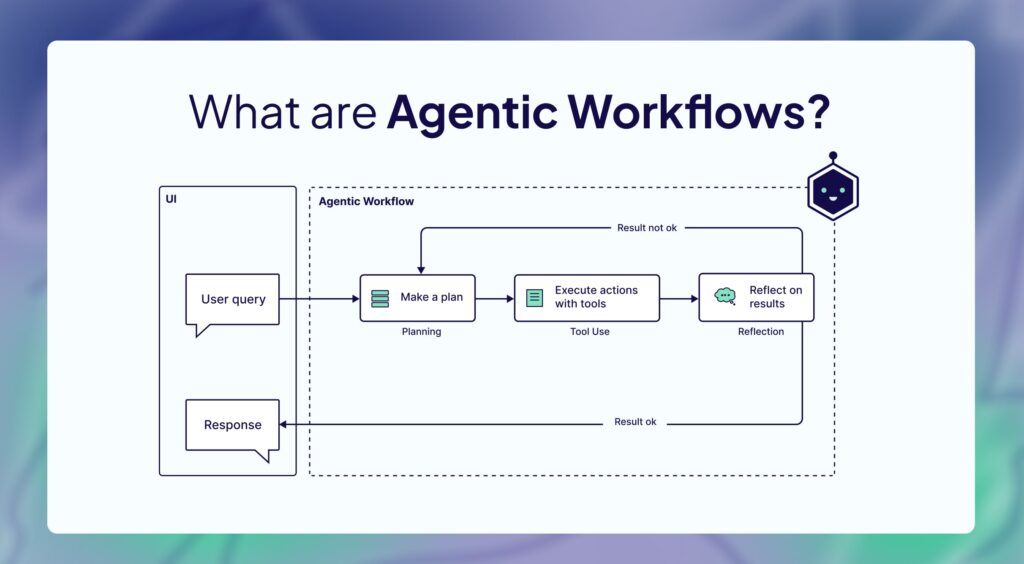
What AI Content Excellence Workflows Actually Look Like
Stage 1: Strategic Planning (Human-Led)
Who: Senior strategist
Duration: 30 minutes per content series
Output: Strategic brief defining objectives, audience, messaging angles, success metrics
AI can’t do this. This requires business context and strategic judgment only humans possess.
Stage 2: Template Selection & Customization (Human-Led)
Who: Content lead
Duration: 15 minutes per piece
Output: Selected template with customized parameters for specific strategic goals
AI could theoretically do this but shouldn’t—template selection requires understanding strategic context and brand positioning nuances.
Stage 3: High-Volume Execution (AI-Led)
Who: AI within template constraints
Duration: 3-5 minutes per draft
Output: First draft meeting template specifications and brand voice requirements
This is where AI excels. Let it execute at scale within the strategic constraints you defined.
Stage 4: Automated Validation (System-Led)
Who: Quality gates running automatically
Duration: 30 seconds per piece
Output: Pass/fail scores on fact-checking, brand voice compliance, structural requirements
This catches 60-70% of issues before humans waste time reviewing. Problems that don’t require judgment get flagged systematically.
Stage 5: Tactical Review (Junior-Led)
Who: Junior editor
Duration: 15-30 minutes per piece
Output: Validated draft with tactical fixes complete, strategic questions escalated
This layer handles structure, tone, and technical accuracy—important work that doesn’t require senior expertise.
Stage 6: Strategic Approval (Senior-Led)
Who: Senior strategist
Duration: 5-10 minutes per piece
Output: Final approval on positioning and high-stakes messaging
Your expensive talent only touches content after stages 4 and 5 already eliminated everything that shouldn’t reach them.
Stage 7: Performance Feedback (System-Led)
Who: ROI tracking dashboard
Duration: Continuous
Output: Data showing what content types perform, which workflow stages need optimization
This closes the feedback loop—workflow improvements come from actual performance data, not guesswork.
What Changes When Workflow Enables Excellence Instead of Preventing It
Broken workflows:
- Senior talent wastes hours fixing preventable mistakes
- AI makes the same errors weekly because workflow doesn’t capture feedback
- Quality depends on individual effort instead of systematic process
- Editing time increases as volume scales
Excellence workflows:
- Senior talent focuses exclusively on strategic judgment
- AI improves monthly because workflow captures and applies feedback systematically
- Quality stays consistent because process architecture enforces standards
- Editing time decreases as volume scales due to continuous optimization
The difference isn’t the AI tools—it’s the workflow architecture that makes those tools productive.
Your competitors aren’t using secret AI platforms. They rebuilt workflows around what AI does brilliantly (high-volume execution within constraints) versus what humans must control (strategic judgment and continuous optimization).
Stop blaming AI tools for workflow failures. Start building process architecture that makes excellence automatic.
Ready to Stop the Bleeding and Start Building Systems That Work?
Stop bleeding budget on broken AI workflows. AIContentCMO delivers the governance frameworks that transform chaotic content operations into predictable revenue engines—eliminating expensive trial-and-error while your team watches results compound. Explore strategic consulting and DIY resources that fix what’s broken in 30 days.
Leave a Reply
You must be logged in to post a comment.