

AI Content Governance: 6 Practices That Eliminate Chaos and Prove ROI
Who This Article Is For
- Content Operations Managers responsible for maintaining quality and consistency across AI-powered content teams
- Marketing Directors who’ve implemented AI tools but struggle with inconsistent output and brand voice drift
- Content Strategy Leads tasked with building scalable governance systems that actually get followed by their teams
- VP Marketing looking for frameworks to prove AI content investment generates measurable ROI
- Agency Account Directors managing multiple client brands and needing systematic quality controls that scale
Your AI Content Operation Is a Disaster Because Nobody’s Governing It
Your team publishes AI content daily. Nobody’s checking if it protects brand voice. Nobody’s tracking what actually drives revenue. Nobody’s preventing the mistakes you fixed last week from happening again this week.
That’s not a content problem. That’s a governance vacuum.
Here’s what’s actually broken: You treated AI like a faster writer instead of a system that requires strategic controls. You bolted new technology onto old processes and acted surprised when quality collapsed and costs exploded.
Your competitors use the same AI tools and get completely different results because they implemented governance practices that force consistency, prevent disasters, and prove ROI.
Stop hoping your team “figures it out” and start installing the six practices that make AI content work predictably.
The Six Governance Practices That Separate Chaos From Competitive Advantage
Practice 1: Document Your Brand Voice Like Engineering Specs, Not Marketing Fluff
What most teams do: “Our brand voice is authentic, approachable, and expert.” (Meaningless to AI and humans alike)
What strategic governance requires: Brand Voice Profile with specific parameters AI can actually follow—forbidden phrases, required terminology, structural preferences, tone benchmarks with examples.
Your Brand Voice Profile isn’t a mood board. It’s a technical specification that defines exactly how your brand communicates so AI can’t deviate even when junior team members write prompts.
Include these four components:
Vocabulary Requirements – Words you always use, words you never use, industry jargon to avoid, branded terminology to emphasize. “We say ‘governance frameworks’ not ‘best practices.’ We never use ‘synergy’ or ‘leverage’ as verbs.”
Tone Parameters – Specific examples of acceptable vs. unacceptable tone for different content types. “Blog posts: Direct and confident without arrogance. Case studies: Results-focused without hyperbole.”
Structural Preferences – How you organize information, preferred sentence patterns, paragraph length guidelines. “Lead with the problem. Never bury the value proposition below the fold. Short paragraphs, punchy sentences.”
Compliance Checkpoints – Automated tests that catch brand voice violations before human review. “Flag any sentence over 30 words. Reject drafts using passive voice in headlines. Alert on competitor mentions.”
When brand voice is documented strategically, AI protects it at scale. When it’s vague marketing language, AI makes it generic.
Practice 2: Implement Three-Gate Quality Systems That Catch Problems Systematically
What most teams do: AI generates draft → senior writer rewrites everything → publish (expensive and inefficient)
What strategic governance requires: Multi-gate system where each checkpoint catches specific issue types before escalating to expensive human review.
Your quality gates work like security checkpoints—each one filters out specific problems so senior talent never wastes time on issues that should’ve been caught earlier.
Gate 1 – Automated Validation: Governance frameworks that check facts, scan for compliance issues, verify brand voice parameters. Catches 60-70% of problems before humans see them.
Gate 2 – Junior Review: $30/hour editor validates structure, tone, and technical accuracy. Fixes tactical issues, escalates strategic concerns only.
Gate 3 – Senior Approval: $150/hour strategist reviews positioning and high-stakes messaging. Focuses exclusively on what requires expertise, not comma splices.
When gates work correctly, your expensive talent only touches content that actually needs their judgment. Everything else gets filtered systematically.
Practice 3: Build Template Libraries That Scale Quality, Not Just Quantity
What most teams do: Every piece starts from scratch with slightly different prompts and inconsistent results.
What strategic governance requires: Pre-built templates for your top 5 content types with locked-in structure, style, and quality standards.
Stop treating every blog post like a unique creative challenge. Strategic operations build template systems that make consistency automatic.
Your “How-To Guide” template includes:
- Brand voice parameters that can’t deviate
- Required structural elements (intro hook, problem statement, solution framework, implementation steps, CTA)
- Quality benchmarks that trigger human review if AI misses them
- SEO requirements built into every output
One senior writer builds the template once. Your entire team executes it perfectly 100 times. That’s the difference between scaling chaos and scaling quality.
Practice 4: Track Edit Patterns and Update Prompts Monthly
What most teams do: Fix the same AI mistakes every week because nobody’s documenting what keeps breaking.
What strategic governance requires: Edit tracking system that identifies recurring issues and systematically eliminates them through prompt optimization.
Your team catches AI hallucinations, fixes weak intros, and restructures vague conclusions—then does it again next week for the same reasons. Governance means capturing feedback and continuously improving AI performance.
Track three metrics weekly:
- Most common edit types – If you’re always rewriting intros, your template needs better intro guidance
- Time spent per edit category – Edits taking 2+ hours indicate systemic prompt failures that need fixing
- Issues caught at each gate – If automated validation misses brand voice problems repeatedly, your parameters aren’t specific enough
AI should get better at your specific use case every month. If it doesn’t, you’re not learning—you’re just repeating expensive mistakes.
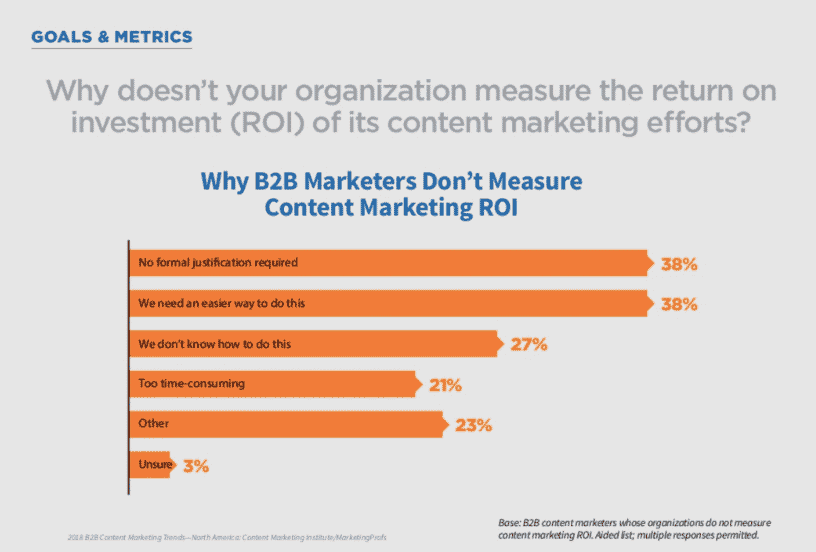
Practice 5: Measure ROI by Revenue Attribution, Not Activity Metrics
What most teams do: “We published 200 AI-assisted blog posts this quarter!” (Leadership doesn’t care about volume)
What strategic governance requires: ROI dashboards showing cost-per-lead, pipeline attribution, and efficiency gains compared to manual production.
Most teams measure AI success by how much content they published. Strategic governance measures by how much revenue that content generated.
Your dashboard tracks:
- Production cost per piece (AI-assisted vs. fully manual comparison)
- Lead generation by content type and production method
- Cost-per-SQL for AI content vs. traditional content
- Time-to-publish efficiency gains over time
When you prove AI content generates better ROI at lower cost, budget conversations become approvals. When you only show activity metrics, leadership questions whether more content means better results.
Practice 6: Conduct Quarterly Governance Audits to Prevent Drift
What most teams do: Set up governance once, watch it slowly deteriorate as team members take shortcuts and standards slip.
What strategic governance requires: Quarterly audits that catch compliance drift before it becomes systematic failure.
Your governance frameworks aren’t “set it and forget it.” They’re living systems that require regular maintenance to stay effective.
Quarterly audit checklist:
- Sample 20 recent AI-assisted pieces and score against brand voice parameters
- Review edit logs to identify new recurring issues
- Test automated quality gates against recent failures they should’ve caught
- Interview team members about governance friction points
- Update templates and prompts based on three months of feedback
Governance drift is inevitable. Quarterly audits catch it before your brand voice completely disappears into generic AI-speak.
What Changes When You Govern Instead of Hope
Teams without governance practices spend every week fighting the same fires—fixing AI mistakes, explaining brand voice violations to junior writers, justifying content budgets that don’t show ROI.
Teams with strategic governance practices spend their time optimizing what already works and scaling what proves profitable.
The difference between AI chaos and AI advantage isn’t the tools you bought—it’s the governance practices you haven’t implemented.
Your competitors aren’t smarter or better funded. They just stopped hoping AI would “figure itself out” and started building the systems that force it to work predictably.
Governance isn’t bureaucracy. It’s the strategic framework that makes AI generate revenue instead of chaos.
Ready to Stop the Bleeding and Start Building Systems That Work?
Stop bleeding budget on broken AI workflows. AIContentCMO delivers the governance frameworks that transform chaotic content operations into predictable revenue engines—eliminating expensive trial-and-error while your team watches results compound. Explore strategic consulting and DIY resources that fix what’s broken in 30 days.
Leave a Reply
You must be logged in to post a comment.