

Who This Article Is For
- CMOs and VP Marketing planning AI content transformation and needing a proven implementation timeline to present to leadership
- Content Strategy Directors tasked with “making AI work” but lacking a clear roadmap from chaos to results
- Marketing Operations Leads responsible for deploying AI tools systematically across content teams
- Digital Transformation Leaders evaluating AI governance frameworks and needing concrete implementation milestones
- Agency Leadership building AI-powered services and needing repeatable client onboarding processes
AI Content Strategy: 90 Days From Chaos to Revenue Engine
Your team bought every AI content tool on the market. You trained everyone on prompts. You published more content than ever.
Results? Declining conversions, eroded brand voice, and a CMO asking why the budget tripled.
You Don’t Need Another AI Tool—You Need a Roadmap That Actually Works
Here’s the brutal truth: AI tools work brilliantly when you know where you’re going. Without a strategic roadmap, they just help you get lost faster.
Your competitors aren’t using secret platforms. They’re following proven implementation roadmaps that eliminate expensive trial-and-error. They know exactly what to build, in what order, and how to prove ROI at every milestone.
Stop experimenting and start executing. Here’s the 90-day roadmap that transforms AI chaos into competitive advantage.
The 90-Day AI Content Roadmap That Actually Generates ROI
Phase 1: Foundation (Days 1-30) – Stop the Bleeding
Week 1: Conduct the Forensic Audit
Your operation is broken—you need to know exactly where before you fix anything.
Audit your current state across three dimensions:
- Tool usage patterns – Which AI platforms are teams actually using vs. licenses you’re paying for
- Workflow bottlenecks – Where editing time explodes and quality collapses
- Output quality variance – Why some content performs while most underperforms (Content Audit)
Most teams skip this step and start optimizing broken processes. Strategic roadmaps begin with diagnosis, not solutions.
Document your three biggest value leaks. Usually it’s: brand voice inconsistency destroying differentiation, excessive editing time burning senior talent, and zero ROI attribution making budget justification impossible.
Week 2: Build Your Brand Voice Profile
Your Brand Voice Profile isn’t marketing fluff—it’s the technical specification that defines how your brand communicates so AI can’t deviate.
Document four critical components:
- Vocabulary requirements (words you always use, words you never use)
- Tone parameters with specific examples for each content type
- Structural preferences that differentiate your content
- Compliance checkpoints that catch violations automatically
One senior writer builds this once. Your entire team executes it consistently forever. That’s how you scale quality.
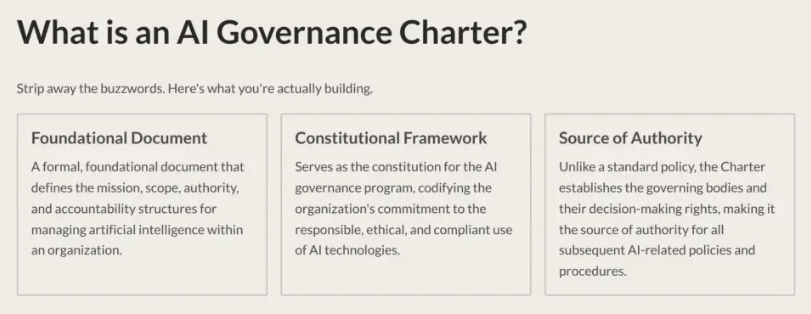
Week 3: Design Your Governance Charter
Your AI Governance Charter defines the rules AI must follow and the quality gates that enforce them.
Include:
- Three-gate quality system (automated validation, junior review, senior approval)
- Edit approval workflows (who reviews what, when escalation happens)
- Compliance requirements (legal, regulatory, brand standards)
- Feedback loops that improve AI performance monthly
Week 4: Run Your First Pilot
Pick one content type. Implement your new governance framework. Prove it works before scaling.
Track three metrics:
- Editing time reduction (should drop 40-60% immediately)
- Brand voice consistency scores (measure against your profile parameters)
- Team satisfaction (less frustration = sustainable implementation)
Pilot success proves your roadmap works. Pilot failure reveals what needs adjusting before you scale broken systems.
Phase 2: Optimization (Days 31-60) – Build the Engine
Week 5-6: Implement Quality Gates Across All Content
Scale your three-gate system from pilot to full operation.
Gate 1 catches 60-70% of issues automatically—fact-checking, brand voice validation, compliance scanning. Junior talent never sees preventable mistakes.
Gate 2 handles tactical fixes—structure, tone, technical accuracy. $30/hour work stays with $30/hour talent.
Gate 3 validates strategic positioning. Your expensive senior talent focuses exclusively on what requires their expertise.
Quality gates aren’t bureaucracy. They’re the system that makes senior talent 3x more productive by eliminating work that shouldn’t reach them.
Week 7-8: Build Template Libraries That Scale
Create templates for your top 5 content types with locked-in brand voice, structure, and quality standards.
Each template includes:
- Voice parameters AI can’t violate
- Required structural elements
- SEO frameworks built in
- Automated quality benchmarks
Stop treating every piece like a unique creative challenge. Templates make consistency automatic and quality scalable.
Phase 3: Measurement (Days 61-90) – Prove ROI
Week 9-10: Deploy ROI Tracking Dashboards
Leadership doesn’t care that you published 200 blog posts. They care whether those posts generated pipeline.
Your ROI dashboard tracks:
- Cost per piece (AI-assisted vs. manual production)
- Lead generation by content type and production method
- Cost-per-SQL comparison (prove AI content converts cheaper)
- Time-to-publish efficiency gains
When you prove AI content generates better results at lower cost, budget conversations become approvals instead of justifications.
Week 11-12: Run Your First Results Review
Present your 90-day transformation to leadership with quantifiable proof:
- Editing time reduced 60-70% (show before/after comparison)
- Brand voice consistency improved (score recent content against your profile)
- Production costs decreased per piece (calculate savings)
- Pipeline attribution increased (show AI content performance vs. manual)
This isn’t a progress report. It’s proof that strategic governance transforms AI from expensive chaos into profitable competitive advantage.
What Happens After Day 90
Most teams waste 12-18 months experimenting with AI tools hoping something clicks.
Strategic roadmaps compress that timeline to 90 days by implementing proven frameworks instead of inventing new ones.
After 90 days, you have:
- Governance systems that protect brand voice at scale
- Quality gates that eliminate 70% of editing friction
- Template libraries that make consistency automatic
- ROI dashboards that prove content drives revenue
Then you optimize what’s working and scale what’s profitable.
Your competitors aren’t smarter. They just stopped guessing and started following roadmaps that actually work.
The difference between AI disaster and AI advantage isn’t the tools you bought—it’s the roadmap you’re following. Most teams have no roadmap. Strategic operations follow the 90-day framework that eliminates expensive trial-and-error.
Stop experimenting. Start executing.
Ready to Stop the Bleeding and Start Building Systems That Work?
Stop bleeding budget on broken AI workflows. AIContentCMO delivers the governance frameworks that transform chaotic content operations into predictable revenue engines—eliminating expensive trial-and-error while your team watches results compound. Explore strategic consulting and DIY resources that fix what’s broken in 30 days.

Chantelle Kadala is an AI Content Strategist, Director of Content Ops, Author, and Founder at AiContentCMO.com, where she helps teams turn AI-powered content from scattered experiments into governed, revenue-aligned operations. Known for blending sharp strategy with human-first storytelling, Chantelle builds content systems that protect brand trust, reduce operational chaos, and connect every piece of content to measurable business outcomes.
Leave a Reply